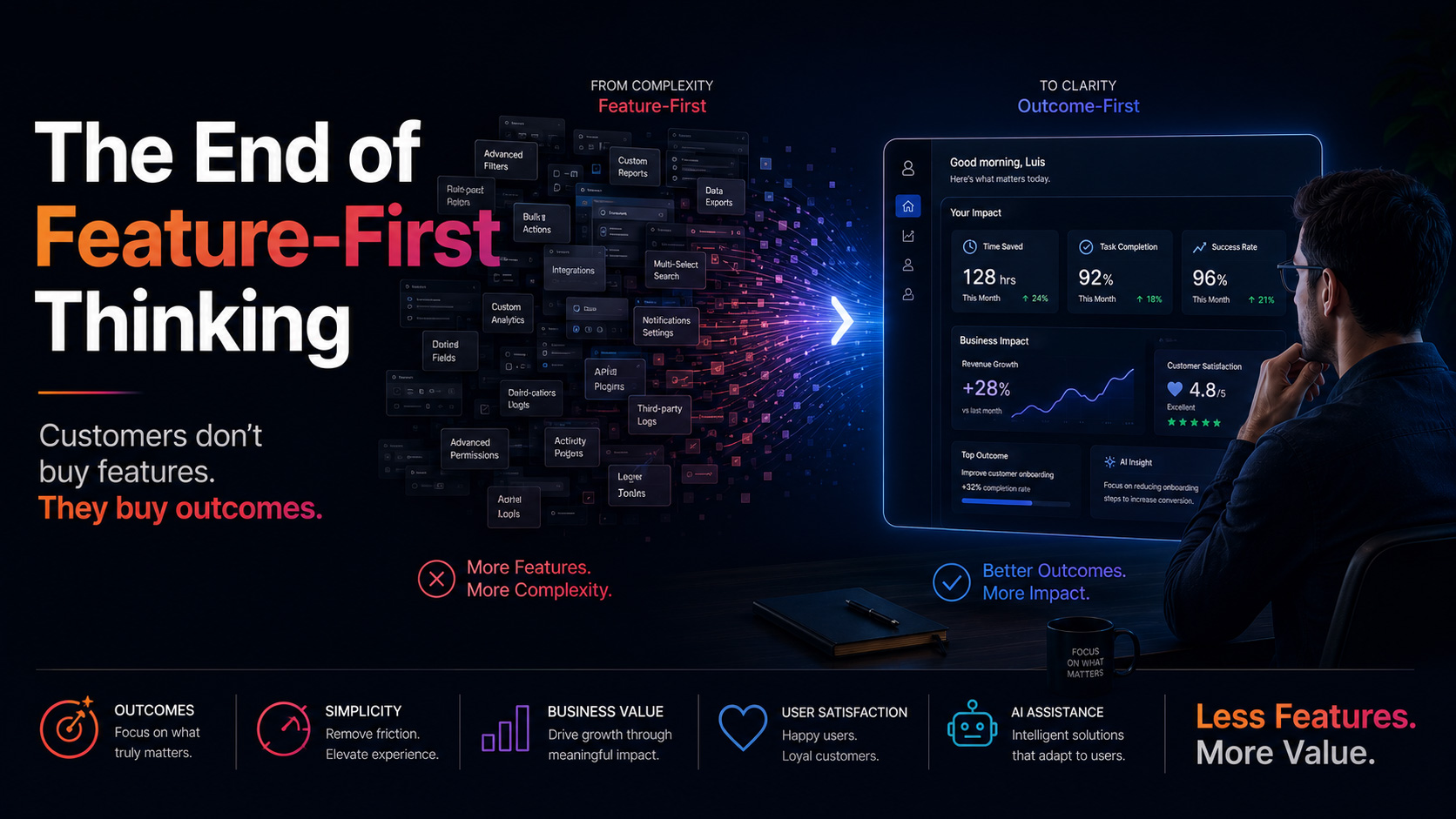
Customers don’t buy features. They buy outcomes.
For years, digital products competed by adding more features.
More dashboards.
More settings.
More integrations.
More customization.
More complexity.
The assumption was simple:
More features = More value.
But something changed.
Today’s most successful products aren’t winning because they offer the longest feature list.
They’re winning because they solve problems faster, more simply, and with less friction.
We’re entering the end of Feature-First Thinking.
The Feature Trap
Many product roadmaps are still driven by requests like:
“Our competitor has this feature.”
“Customers are asking for another filter.”
“Let’s add one more option.”
Individually, these requests may seem reasonable.
Over time, however, they create products that become increasingly difficult to understand.
Complexity accumulates.
Users feel overwhelmed.
Teams spend more time maintaining features than creating value.
Eventually, the product becomes harder to improve because every new feature increases technical and design debt.
Customers Don’t Want Features
Customers don’t wake up hoping to use another dashboard.
They don’t dream about another settings menu.
They don’t care how many AI models your platform supports.
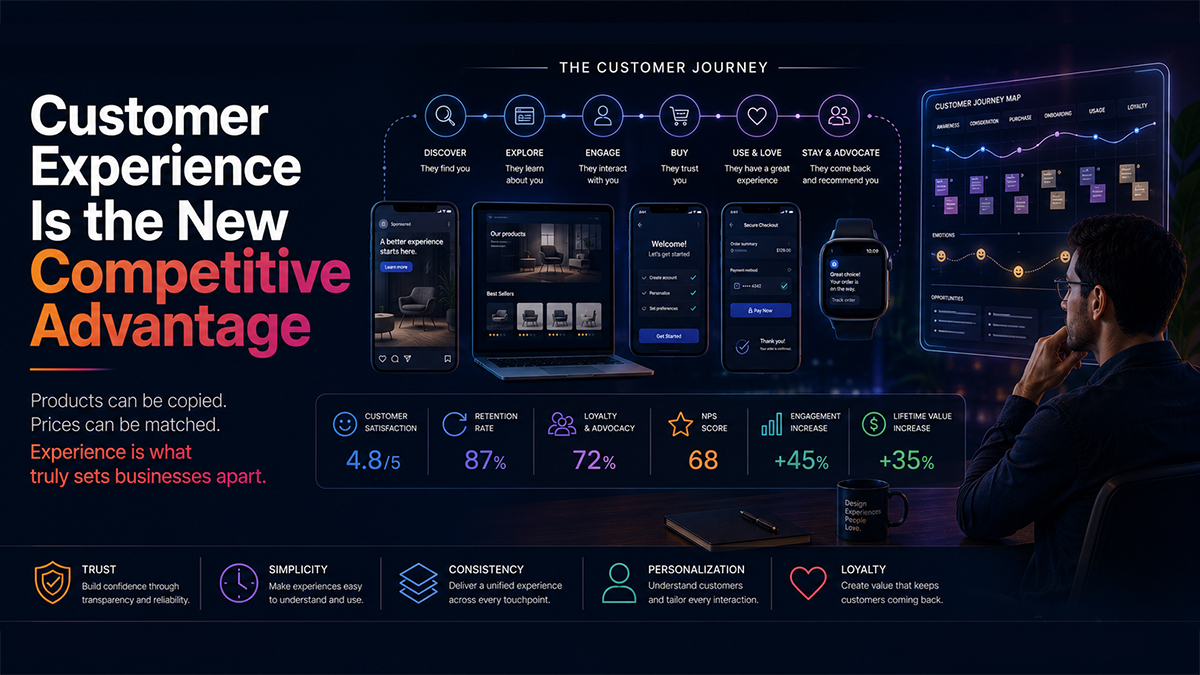
They care about results.
They want to save time.
Reduce effort.
Increase confidence.
Solve their problems.
The feature itself is rarely the value.
The outcome is.
Outcome-Driven Products
The best product teams ask different questions.
Instead of asking:
“What feature should we build next?”
They ask:
“What outcome do we want to improve?”
That simple shift transforms product strategy.
Rather than measuring success by the number of releases, they measure:
- Customer retention
- Time saved
- Task completion
- User satisfaction
- Adoption
- Business impact
Features become a means not the objective.
Simplicity Wins
Adding features is relatively easy.
Removing unnecessary complexity is much harder.
It requires discipline.
Research.
Data.
And the confidence to say no.
The products people love most often share one characteristic:
They feel effortless.
Behind that simplicity lies hundreds of design decisions focused on eliminating friction instead of adding functionality.
AI Accelerates the Shift
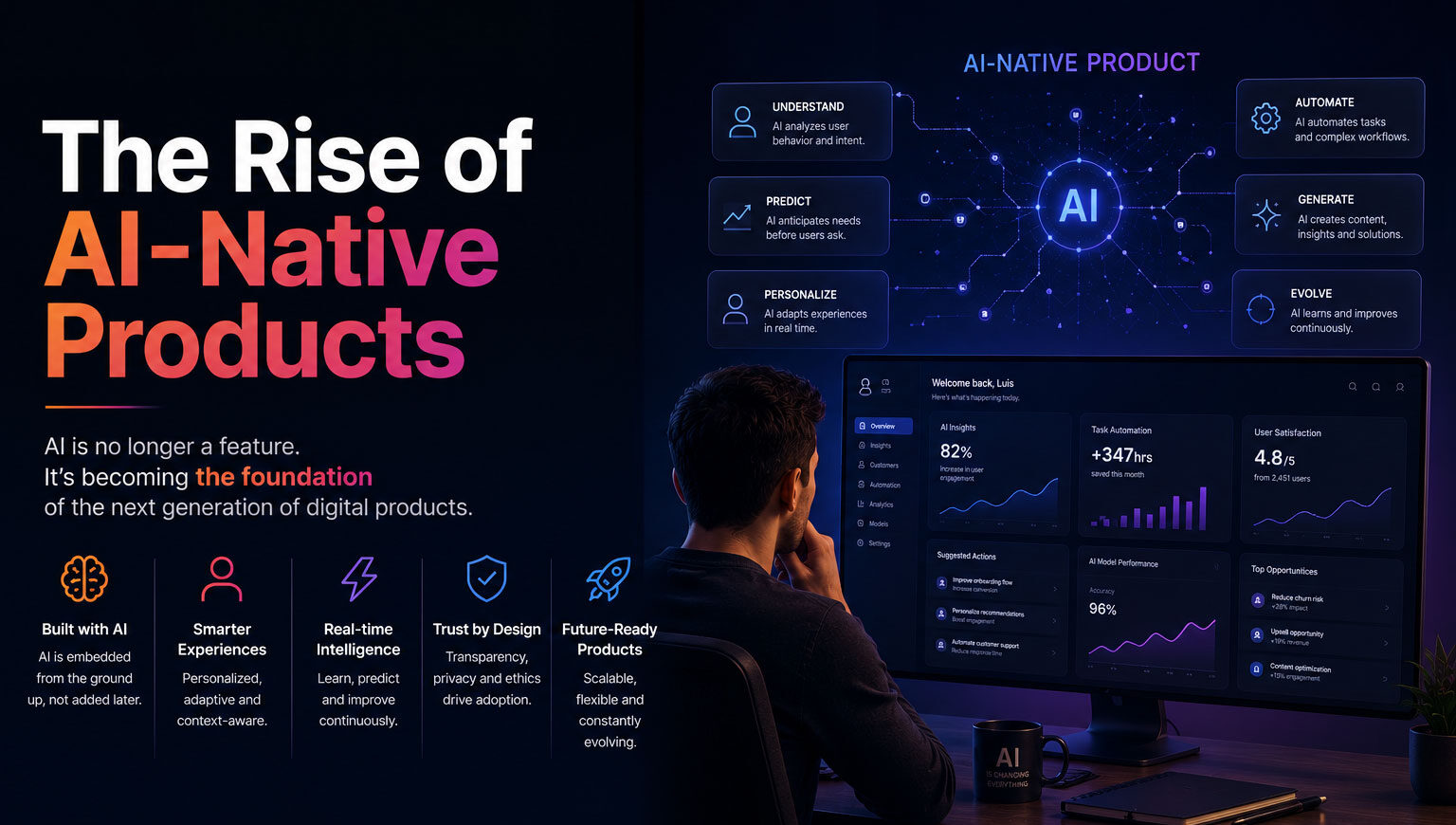
Artificial Intelligence is making Feature-First Thinking even less relevant.
Instead of forcing users to navigate dozens of menus, AI can understand intent and perform tasks conversationally.
Interfaces become adaptive.
Workflows become dynamic.
The future isn’t about exposing every option.
It’s about delivering the right outcome at the right moment.
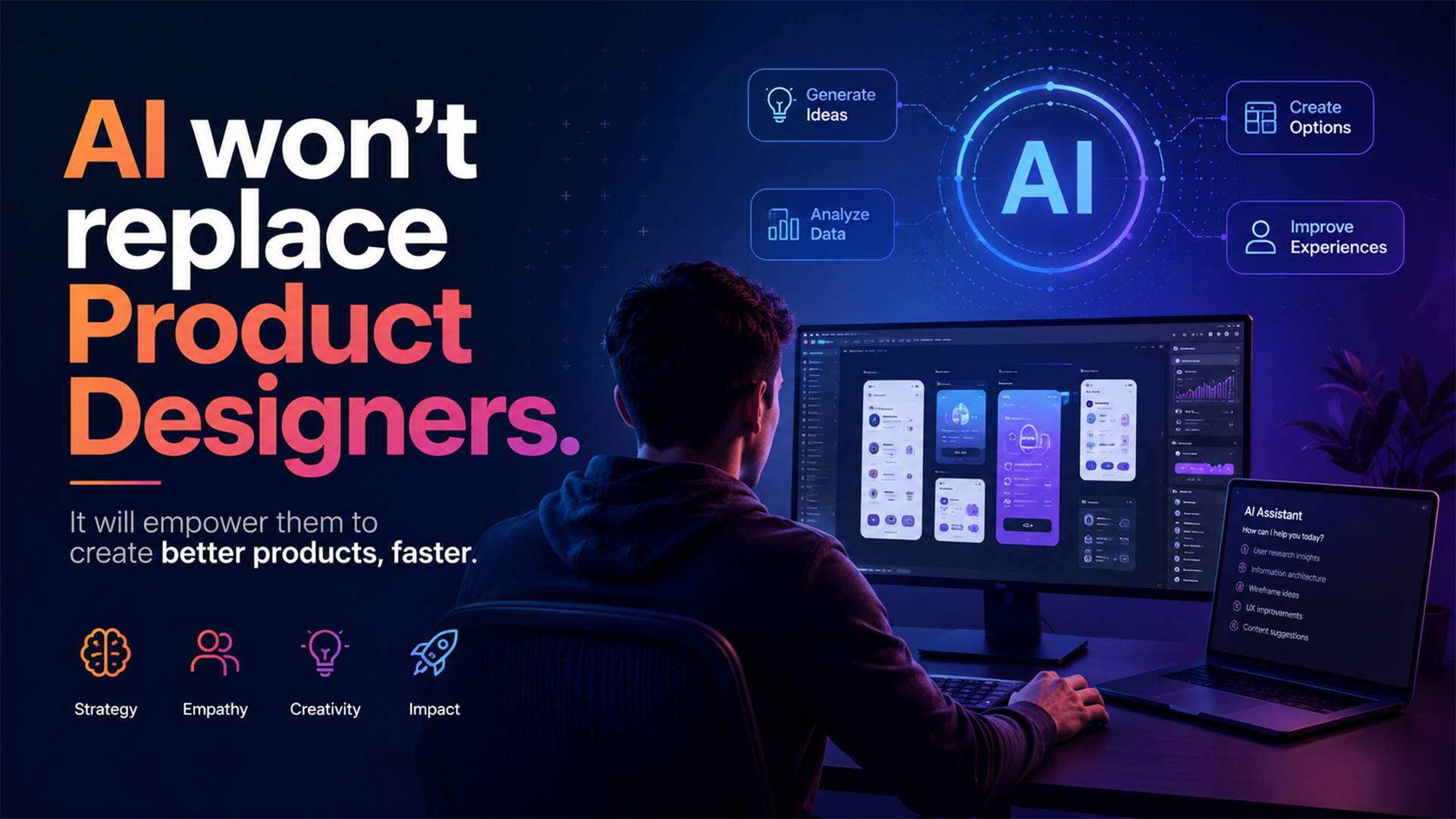
This changes the role of Product Designers from organizing interfaces to designing intelligent experiences.
Build Less. Solve More.
Great products aren’t measured by how much they include.
They’re measured by how much they remove.
Every unnecessary click.
Every confusing option.
Every redundant workflow.
Every piece of friction.
The companies leading the next generation of digital products understand that innovation isn’t adding more.
It’s making the important things easier.
Final Thoughts
Feature-first thinking helped shape the software industry.
Outcome-first thinking will define its future.
The best digital products won’t have the most features.
They’ll create the greatest impact with the least complexity.
Because customers don’t remember how many features your product had.
They remember how easily it helped them accomplish what mattered.
The future belongs to products that solve problems not products that collect features.