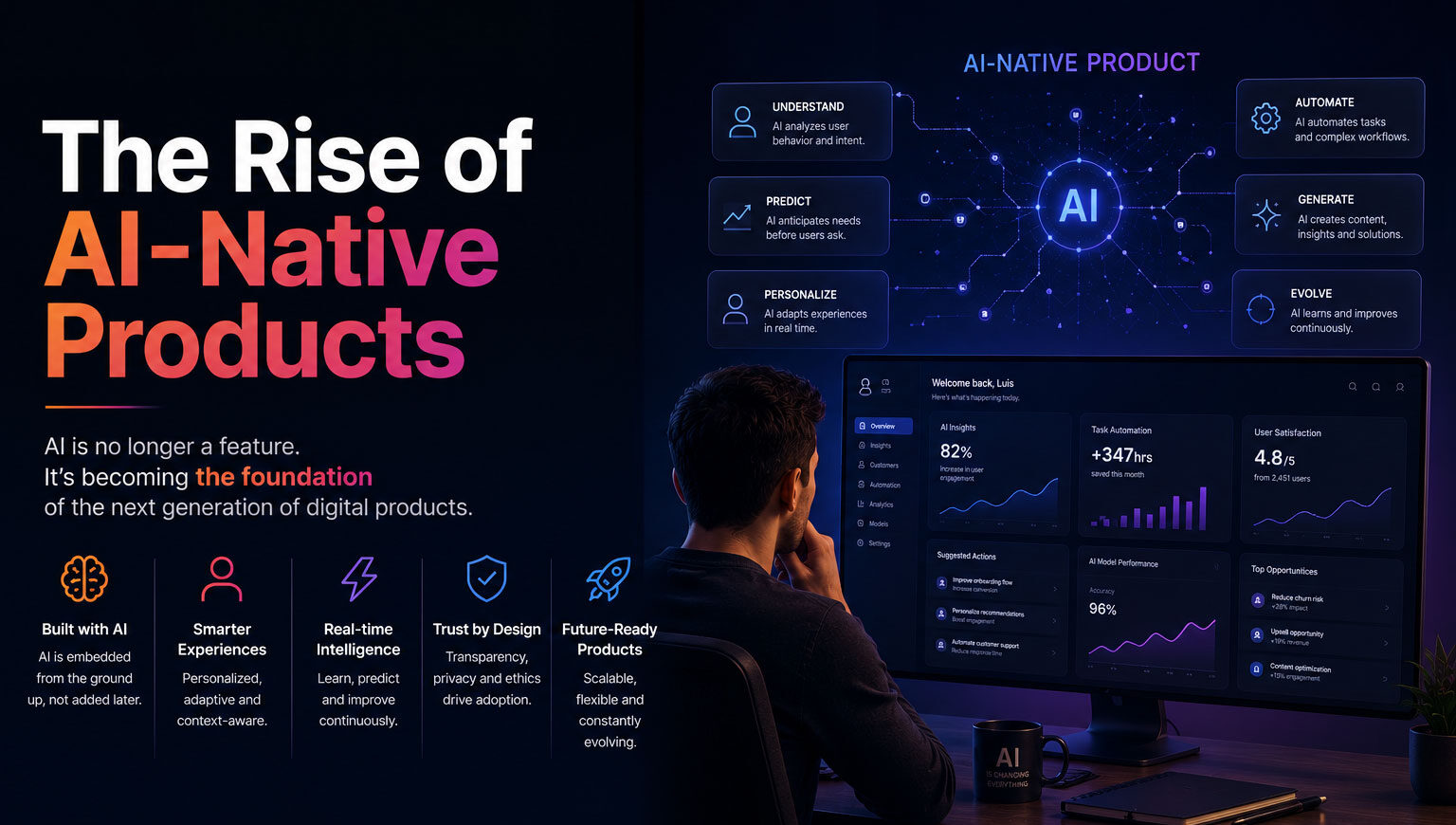
Artificial Intelligence is transforming the way we design digital products. From generating wireframes to writing UX copy and analyzing user research, AI has become one of the most powerful tools ever introduced to the design industry.
Yet, one question continues to dominate conversations:
Will AI replace Product Designers?
My answer is simple:
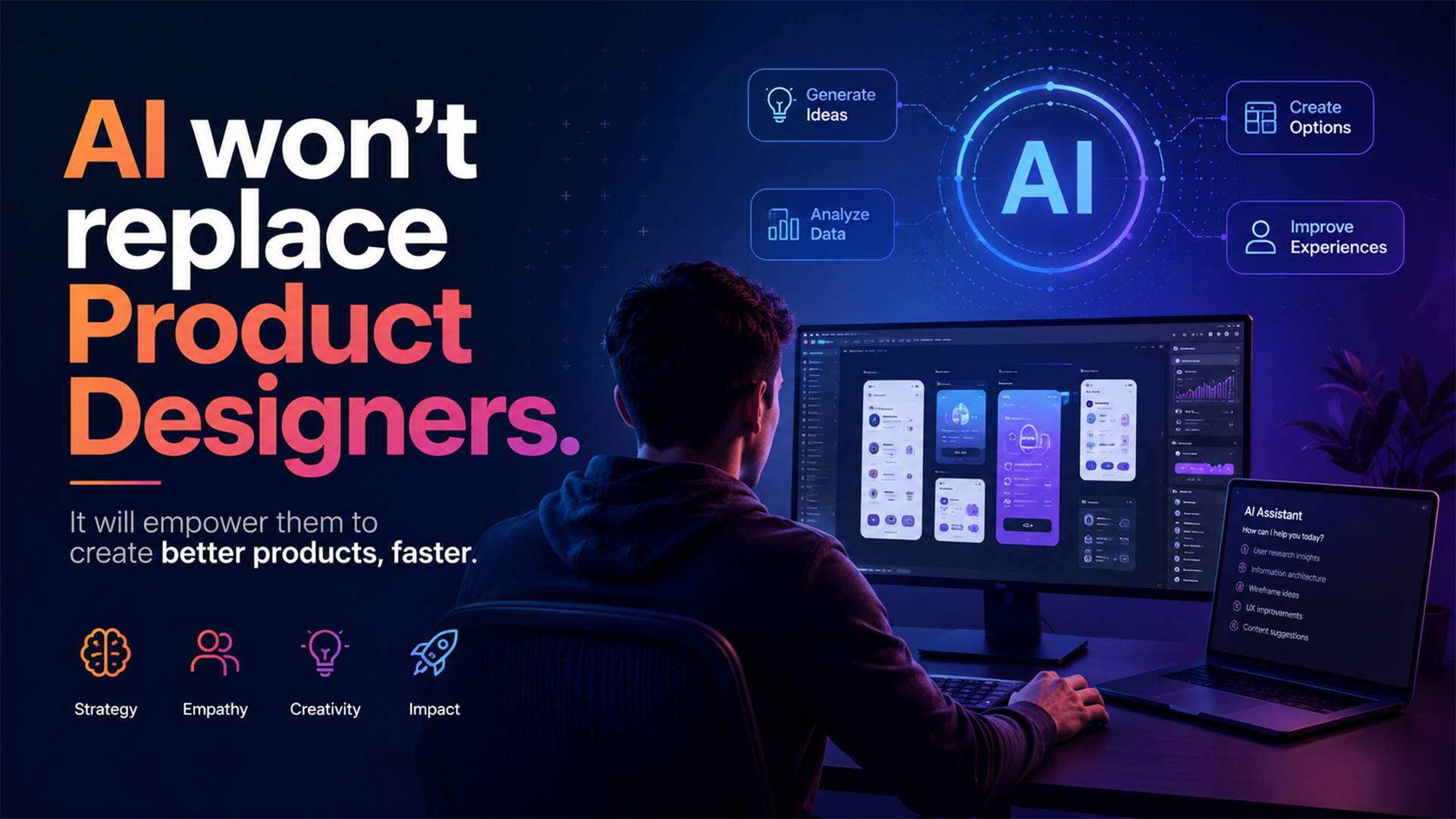
No. But it will redefine what makes a great Product Designer.
The Real Shift Isn’t Creativity. It’s Efficiency
Throughout history, every major technological advancement has sparked fears of job replacement.
When design software emerged, people believed graphic designers would disappear.
When no-code platforms became popular, many predicted the end of developers.
Now, AI has become the latest disruption.
But history shows something different.
Technology doesn’t eliminate great professionals.
It changes how they work.
AI dramatically reduces the time spent on repetitive and operational tasks, allowing designers to focus on the work that truly creates business value.
What AI Already Does Well
Today’s AI tools can assist Product Designers by:
- Generating UI concepts
- Creating low-fidelity wireframes
- Organizing user research
- Summarizing interviews
- Writing UX copy
- Generating design alternatives
- Creating personas
- Producing documentation
- Supporting accessibility reviews
- Accelerating brainstorming sessions
These capabilities save hours of manual work.
But they don’t replace strategic thinking.
What AI Cannot Replace
Great product design has never been about drawing screens.
It’s about understanding people.
The most valuable Product Designers excel at skills that AI cannot genuinely replicate:
Empathy
Understanding user frustrations, emotions, motivations, and behaviors requires human observation and interpretation.
Design begins with people, not pixels.
Strategic Thinking
Choosing what should be built is often more important than deciding how it should look.
AI can generate solutions.
Designers determine whether those solutions solve the right problem.
Business Context
Every product decision impacts customer acquisition, retention, revenue, and growth.
Exceptional designers understand the relationship between user experience and business outcomes.
AI doesn’t own that responsibility.
Collaboration
Product design is highly collaborative.
Working with engineers, product managers, stakeholders, researchers, and customers requires communication, negotiation, and leadership.
These remain deeply human skills.
AI Is Becoming a Design Partner
The most successful designers aren’t competing with AI.
They’re collaborating with it.
Instead of spending hours creating multiple layout variations, designers can generate ideas in minutes.
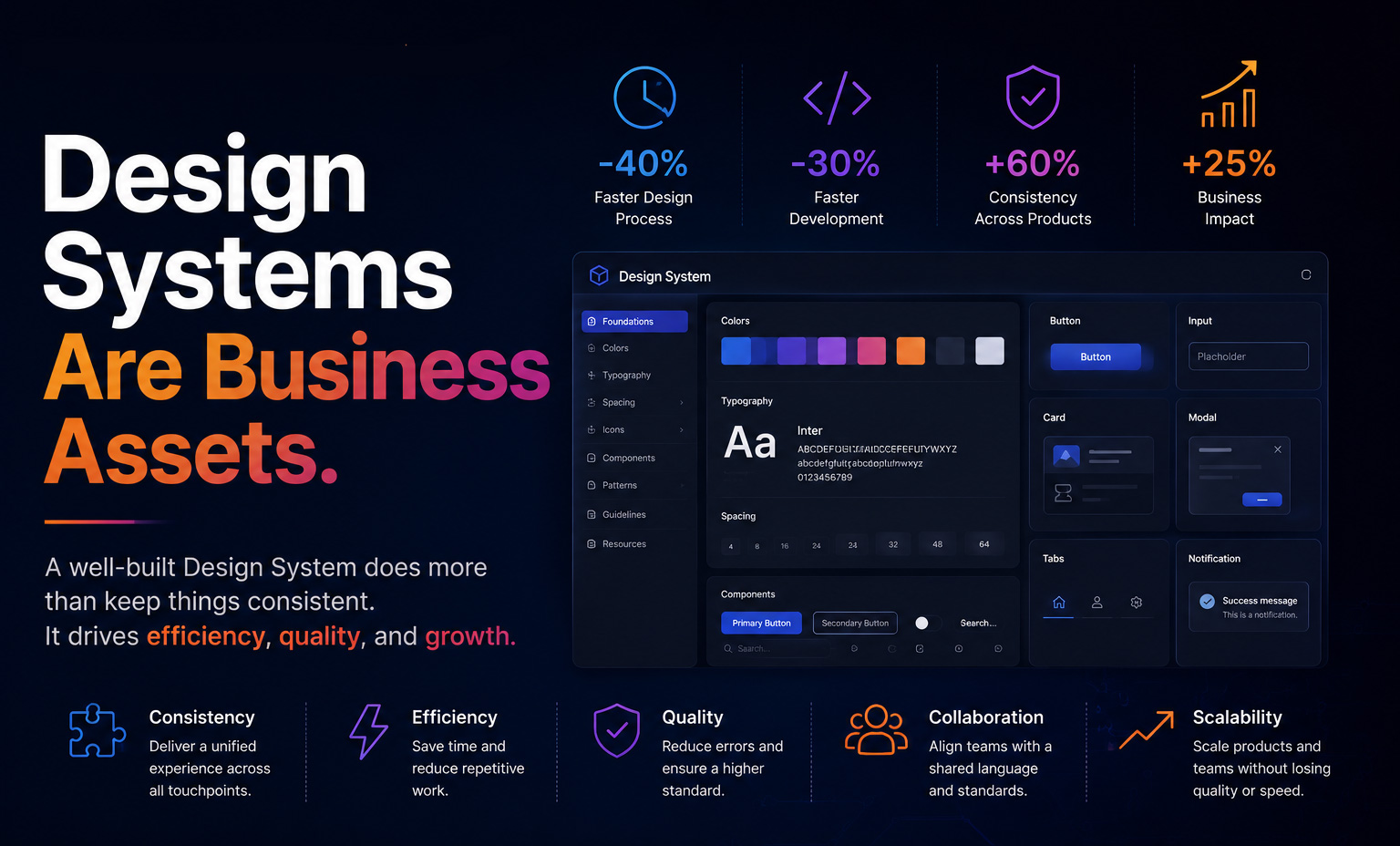
Instead of manually documenting design systems, AI can automate repetitive documentation.
Instead of staring at a blank canvas, designers can start from intelligent suggestions.
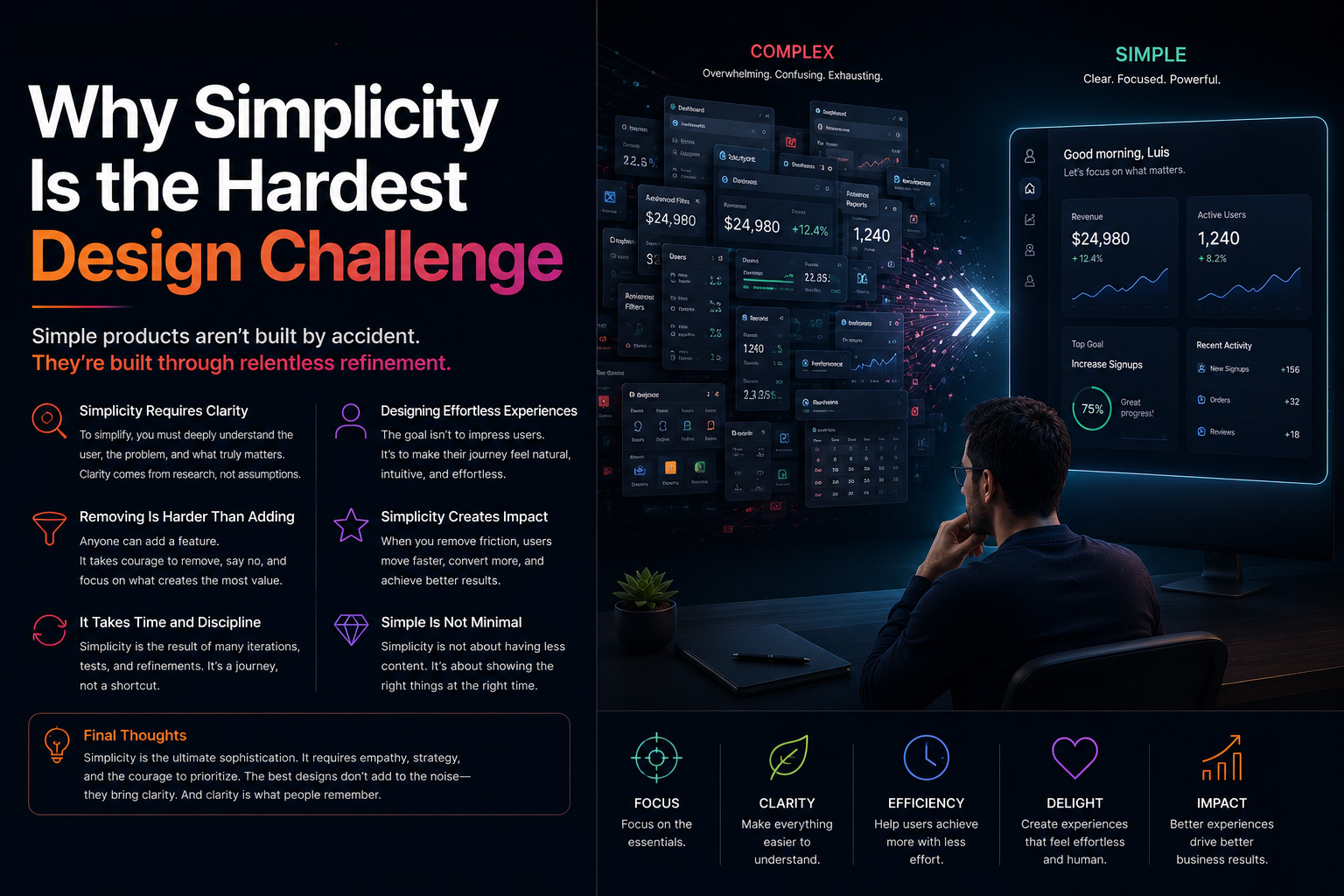
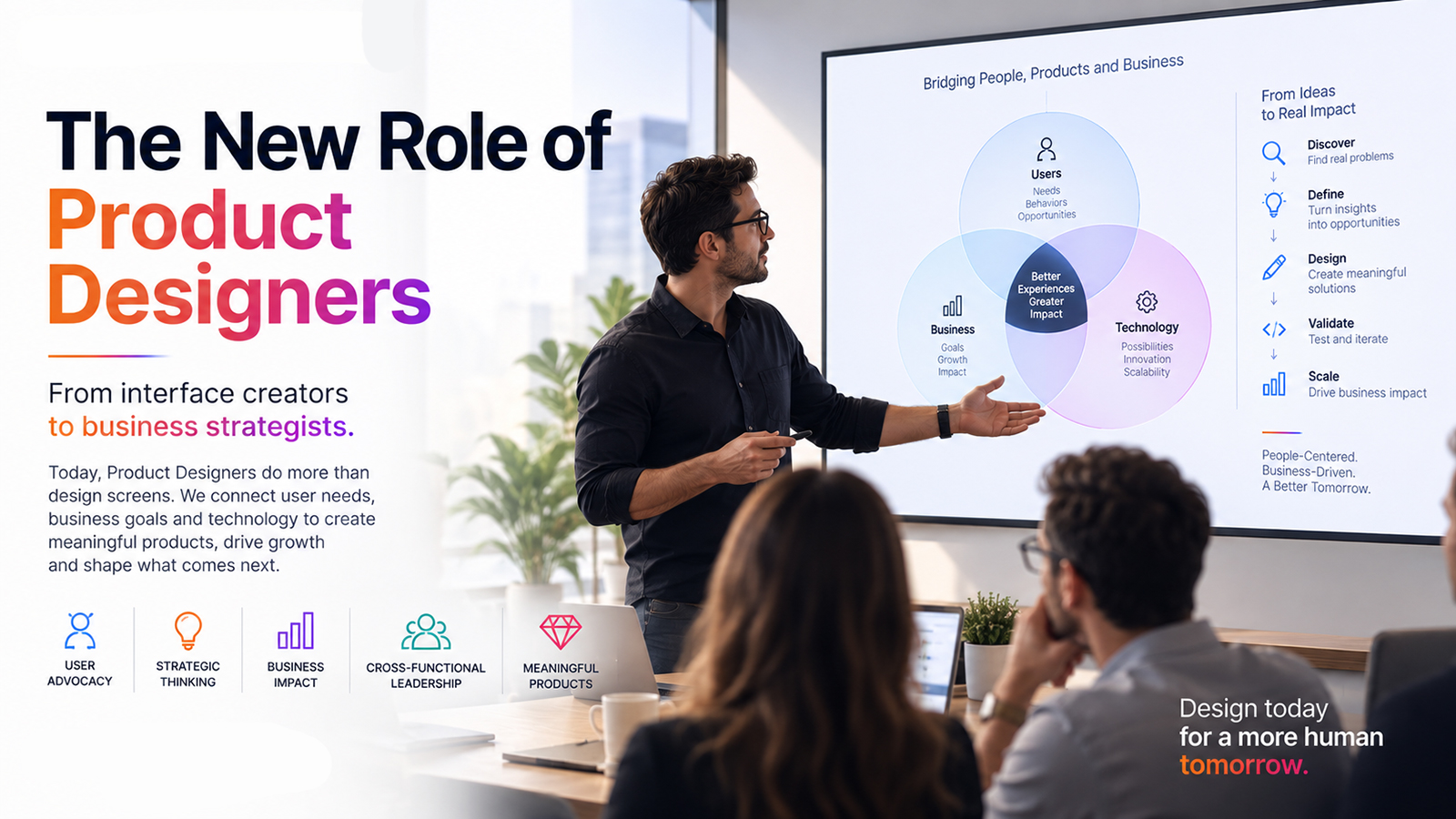
This changes the role of Product Designers from creators of every pixel to orchestrators of better experiences.
The Designers Who Will Thrive
The future belongs to professionals who combine design expertise with AI capabilities.
Tomorrow’s Product Designers will spend less time producing interfaces and more time:
- Solving complex business problems
- Understanding customer behavior
- Validating ideas through research
- Building scalable design systems
- Creating product strategies
- Driving innovation across organizations
AI increases productivity.
Human expertise creates competitive advantage.
Final Thoughts
Artificial Intelligence is not replacing Product Designers.
It’s replacing outdated design workflows.
The professionals who embrace AI will design faster, validate ideas earlier, and dedicate more energy to creativity, strategy, and user experience.
The future isn’t about choosing between humans and AI.
It’s about building products where both work together.
The question is no longer whether AI will change design.
The question is whether we’re ready to evolve with it.