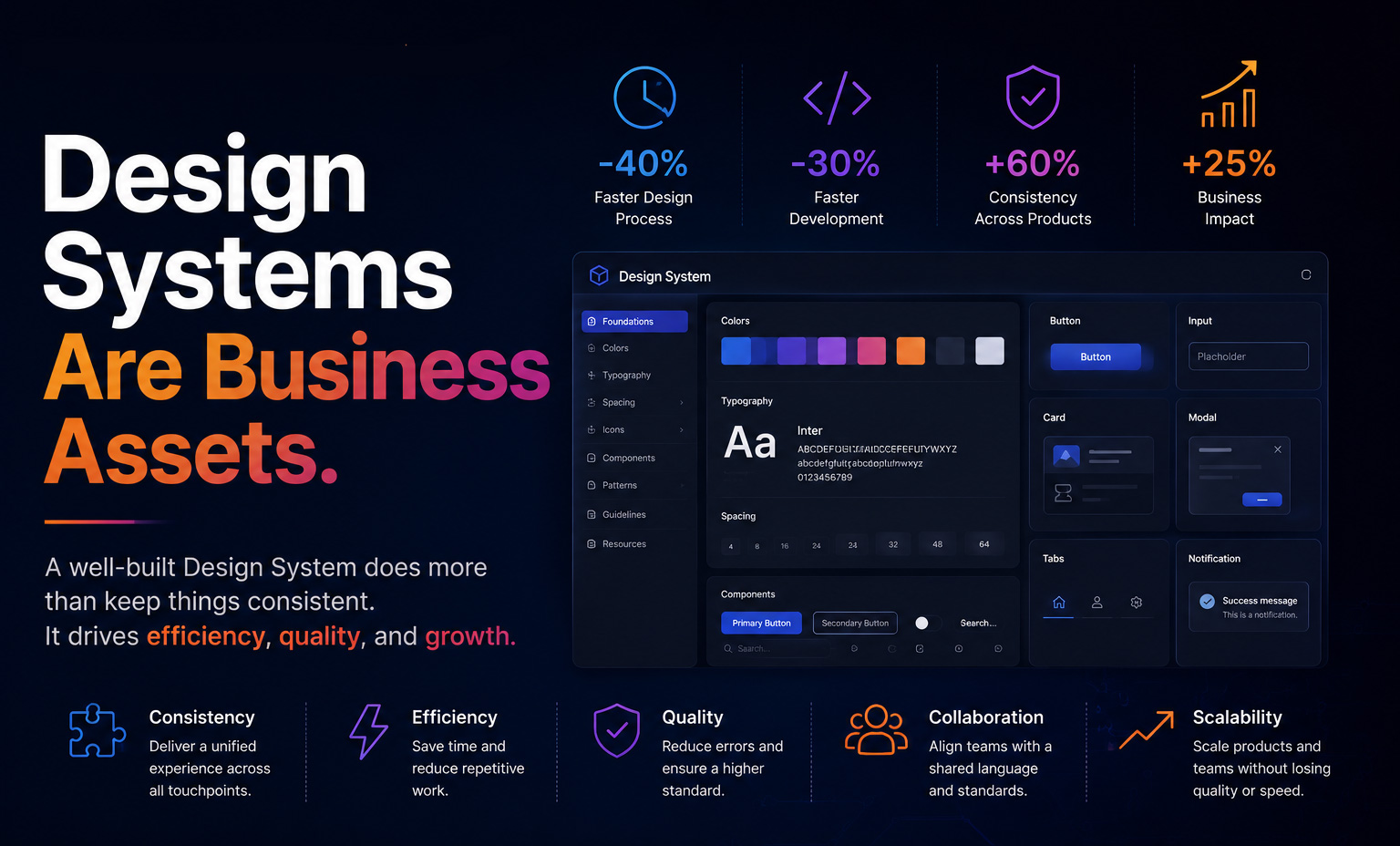
A great Design System doesn’t just create consistency. It accelerates innovation, improves quality, and drives business growth.
When people hear the term Design System, they often think about buttons, colors, typography, and UI components.
That’s only a small part of the story.
A mature Design System isn’t a design library.
It’s a business asset.
The companies building the world’s best digital products—whether startups or global enterprises don’t invest in Design Systems because they’re fashionable.
They invest because they improve speed, quality, scalability, and collaboration.
Beyond Components
A Design System is a shared language.
It connects Product, Design, Engineering, Marketing, and Business around the same standards.
Instead of redesigning the same interface dozens of times, teams reuse proven patterns that have already been validated.
This means less time debating visual details and more time solving customer problems.
Consistency becomes a competitive advantage.
The Hidden Cost of Inconsistency
Without a Design System, every new feature starts from scratch.
Different teams create different buttons.
Different layouts.
Different interactions.
Different experiences.
The result?
- Slower development
- Higher maintenance costs
- Inconsistent user experiences
- More bugs
- Longer onboarding for new team members
- Increased design debt
Small inconsistencies eventually become expensive business problems.
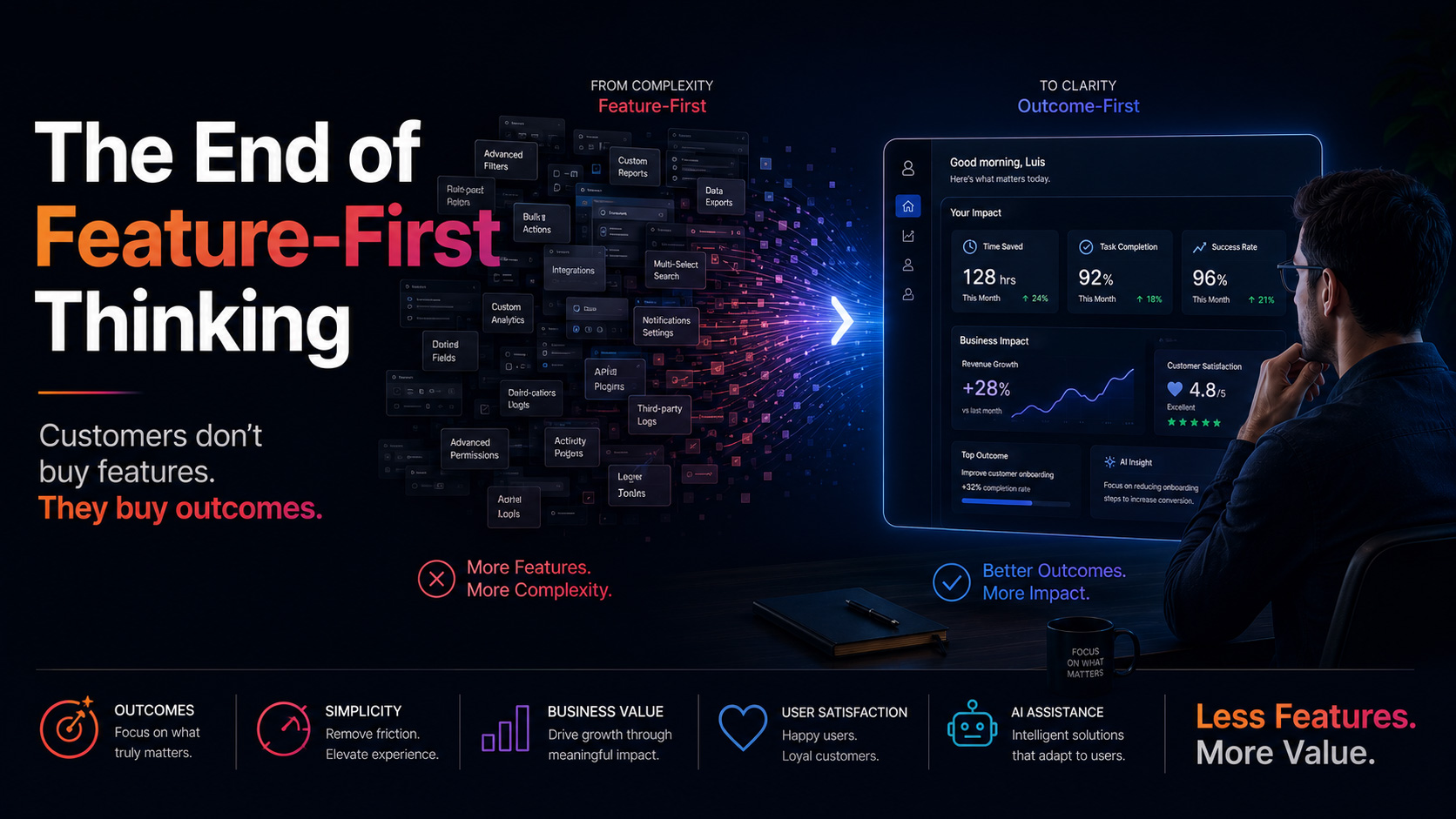
A Design System Creates Business Value
Organizations with mature Design Systems often experience benefits such as:
- Faster product development
- Improved collaboration between Design and Engineering
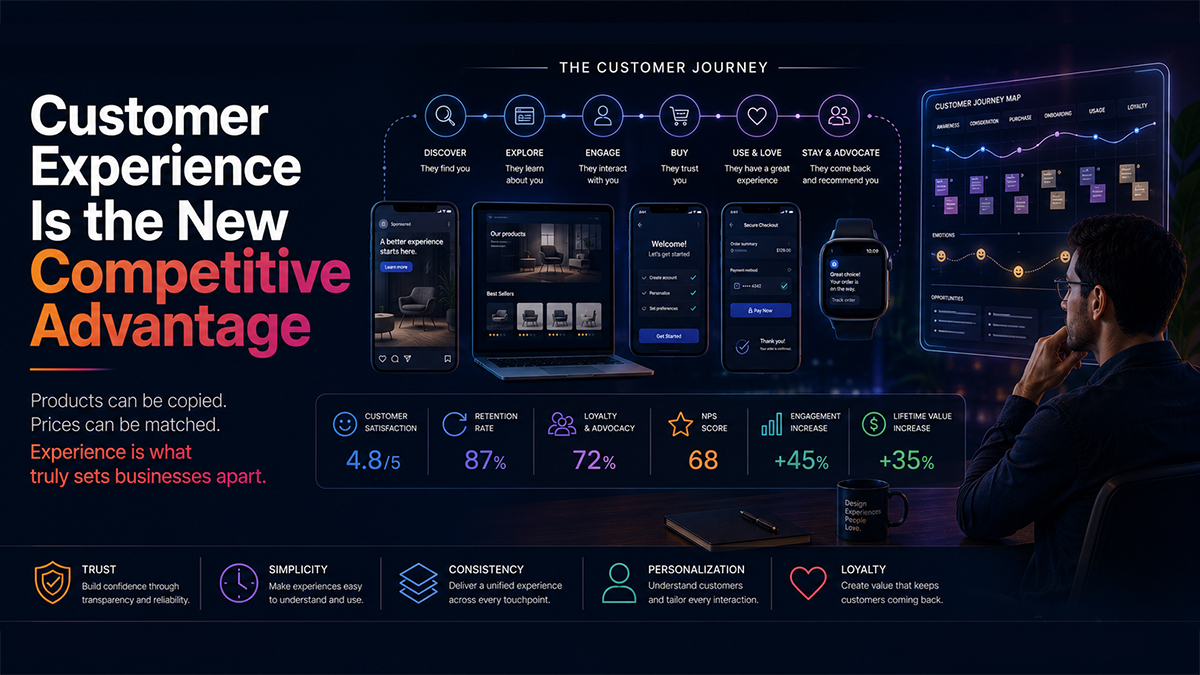
- More consistent customer experiences
- Reduced rework
- Easier scalability across products
- Better accessibility compliance
- Lower long-term maintenance costs
The return on investment isn’t measured by the number of components.
It’s measured by the efficiency they create.
Speed Without Sacrificing Quality
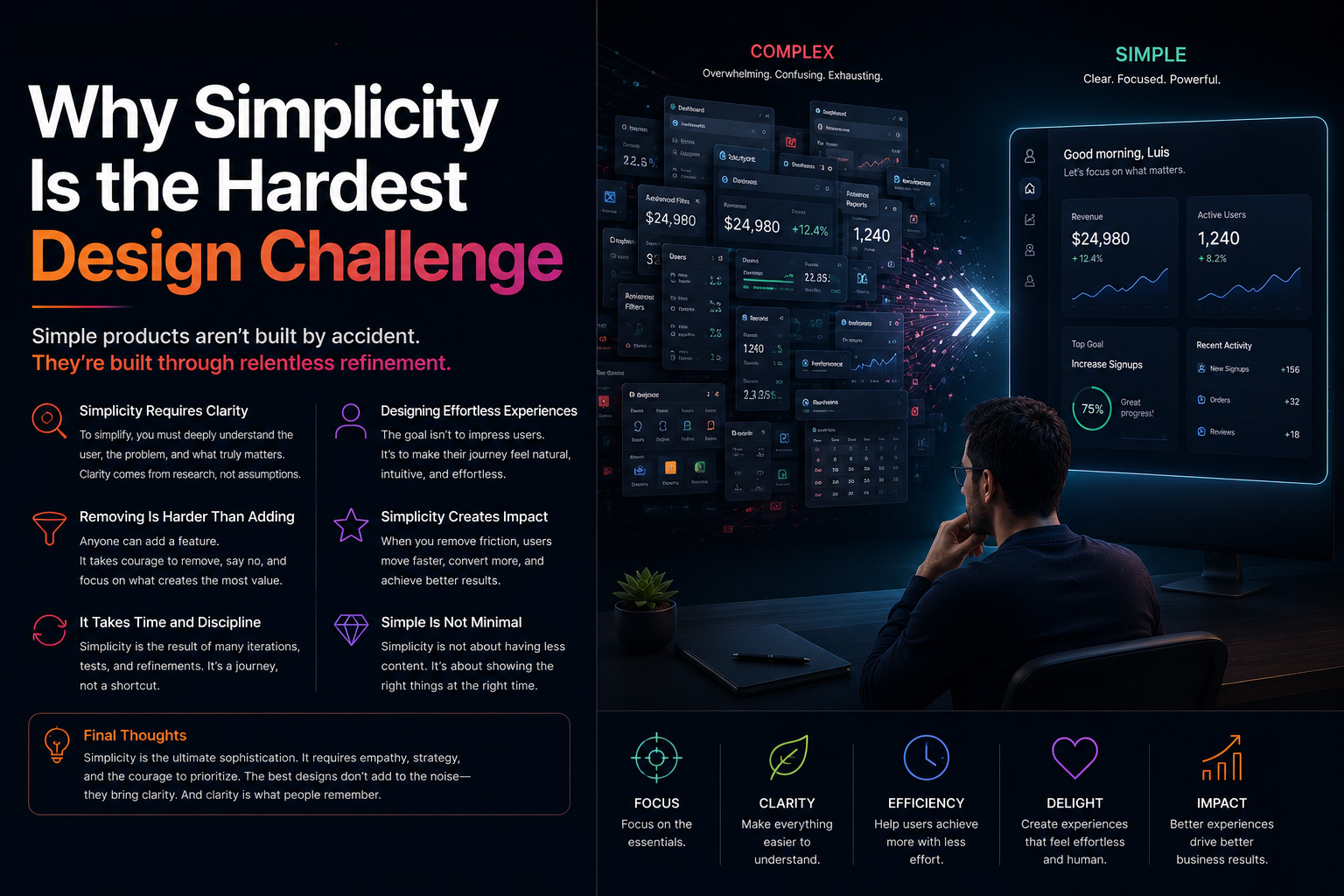
One of the biggest misconceptions is that Design Systems limit creativity.
The opposite is true.
By standardizing repetitive elements, designers gain more time to focus on innovation.
Instead of recreating buttons and forms, they can concentrate on solving complex user problems.
A strong Design System removes friction.
It doesn’t remove creativity.
Collaboration at Scale
Great digital products are built by multidisciplinary teams.
A Design System creates a common language between Product Managers, Designers, Developers, QA teams, and stakeholders.
Everyone works from the same source of truth.
This reduces misunderstandings, accelerates delivery, and improves product quality across every release.
Design Systems Are Never Finished
The best Design Systems evolve continuously.
They grow alongside the product, adapt to new technologies, and incorporate feedback from real users.
They’re living products not static documentation.
Organizations that treat them as strategic assets create digital experiences that remain consistent even as they scale.
Final Thoughts
A Design System isn’t about making interfaces look the same.
It’s about enabling teams to move faster, collaborate better, and deliver higher-quality experiences with confidence.
The strongest companies don’t see Design Systems as a design initiative.
They see them as infrastructure for sustainable growth.
Because in the end…
Better systems build better products.
And better products build better businesses.