
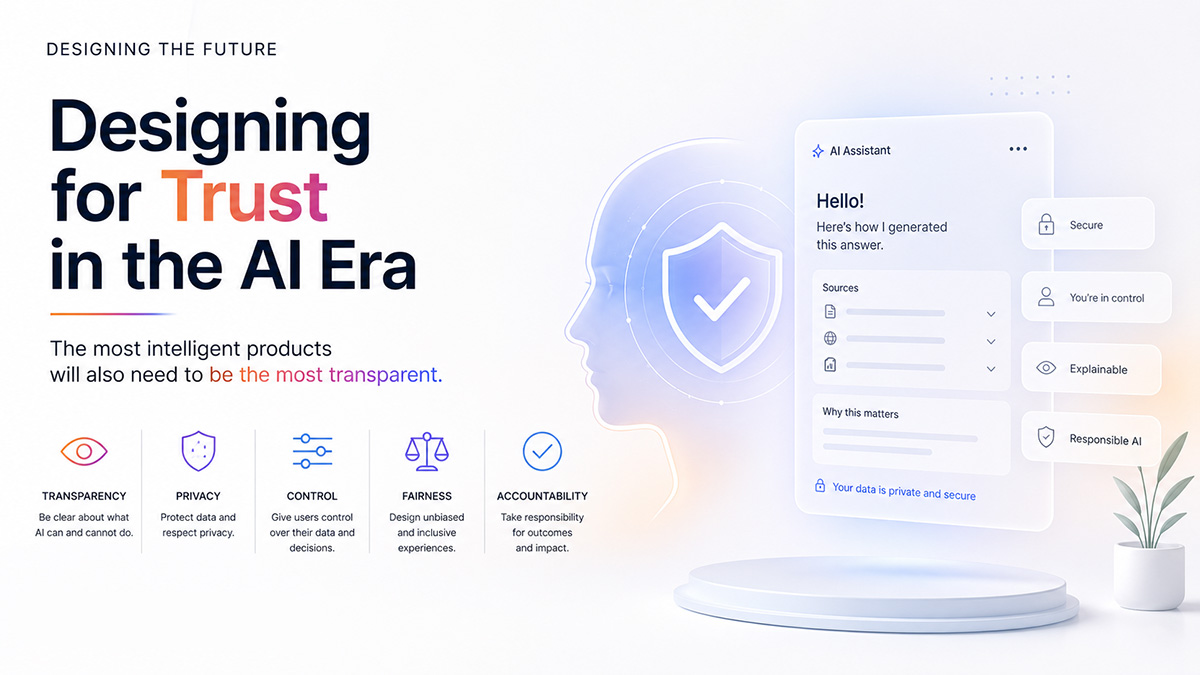
The more intelligent products become, the more human, transparent, and trustworthy they need to be.
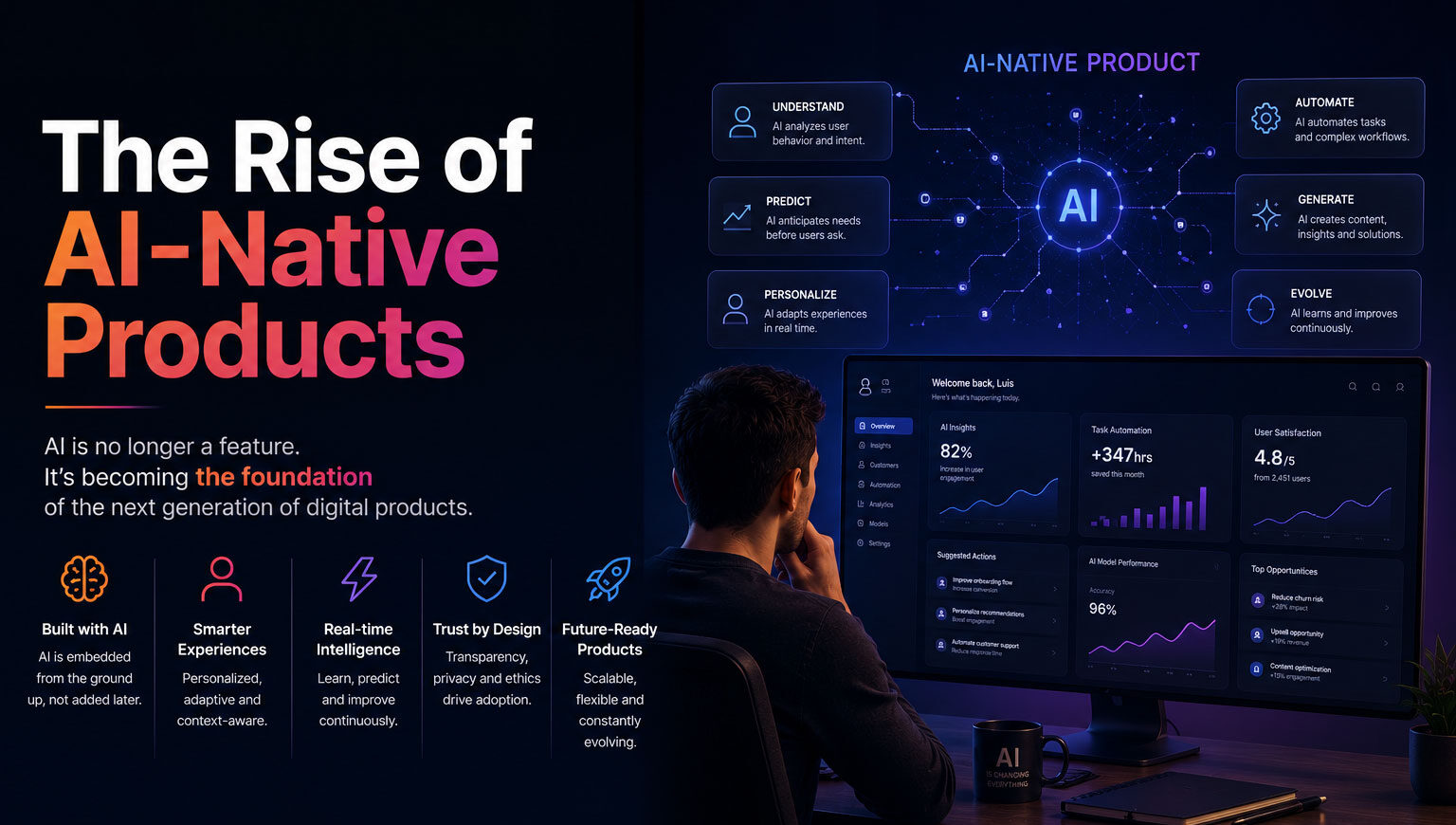
Artificial Intelligence is changing how we interact with technology.
AI can now generate content, recommend decisions, automate workflows, analyze behavior, and personalize experiences in ways that were difficult to imagine only a few years ago.
But as these systems become more powerful, another challenge becomes increasingly important:
Trust.
A product can be intelligent and still fail if people don’t understand it, don’t feel in control, or don’t know what happens to their data.
Trust is becoming a fundamental part of product design.
Trust Is Designed, Not Added
Trust isn’t created by a privacy policy buried at the bottom of a website.
It’s created through thousands of small interactions.
When an AI makes a recommendation, users need context.
When it generates an answer, they need to understand its limitations.
When it makes a mistake, they need a way to recover.
When it uses their data, they need transparency.
These are design decisions.
Transparency Creates Confidence
AI can often feel like a black box.
Users provide information and receive an output without knowing what happened in between.
Good AI experiences don’t necessarily expose complex algorithms.
They explain what matters.
Users should understand:
What the AI can do
What it cannot do
What information it uses
Why a recommendation was made
When the system is uncertain
Transparency reduces uncertainty.
And reducing uncertainty creates confidence.
Control Should Remain Human
Automation is powerful, but removing humans from every decision isn’t necessarily good design.
People need to feel that they’re working with AI, not being controlled by it.
Good AI experiences provide meaningful control.
Users should be able to:
Review AI-generated results
Edit or refine outputs
Undo actions
Change preferences
Provide feedback
Decide when automation should happen
The goal isn’t maximum automation.
It’s appropriate automation.
Privacy Is Part of the Experience
AI products increasingly depend on data.
Conversations.
Documents.
Preferences.
Behavior.
Personal information.
Users deserve to understand how that information is collected, stored, and used.
Privacy shouldn’t exist only as legal documentation.
It should be communicated through the product experience itself.
A trustworthy product makes data practices understandable.
Design for Explainability
AI doesn’t need to explain everything.
It needs to explain what matters.
Instead of:
- “Recommended for you.”
Consider:
- “Recommended based on your recent activity and preferences.”
That small amount of context can significantly change how users perceive the system.
Explainability isn’t about making AI more complicated.
It’s about making its behavior more understandable.
Design for Failure
AI will make mistakes.
The goal isn’t to pretend otherwise.
The goal is to design what happens when it does.
What happens when the AI is uncertain?
What happens when the recommendation is wrong?
What happens when an automated action fails?
A trustworthy experience gives users a clear recovery path.
Trust isn’t created by making AI look perfect.
It’s created by being honest about its limitations.
Fairness and Accountability
AI can influence decisions that affect real people.
Recommendations.
Hiring.
Credit.
Healthcare.
Education.
Content.
Access to information.
That creates a responsibility for everyone involved in building these systems.
Product teams need to consider accessibility, bias, inclusion, human oversight, and unintended consequences.
Responsible AI isn’t simply an ethical discussion.
It’s a product design requirement.
Trust Drives Adoption
There is also a strong business case for trust.
People are more likely to adopt technologies they understand and feel comfortable using.
Trust creates confidence.
Confidence drives adoption.
Adoption creates value.
The most advanced AI technology means little if users don’t feel comfortable relying on it.
The New Role of Product Designers
As AI becomes part of everyday digital products, Product Designers have a new responsibility.
We’re no longer designing only interfaces.
We’re designing the relationship between humans and intelligent systems.
That means considering:
Transparency
Control
Privacy
Explainability
Accessibility
Ethics
Failure recovery
Long-term trust
The best AI experiences won’t simply demonstrate what technology can do.
They’ll demonstrate how technology can help people while keeping them informed and in control.
Final Thoughts
AI can make products smarter.
But intelligence alone doesn’t create a great experience.
People need to understand when to trust the system, when to question it, and when to take control.
That’s why trust must be designed from the beginning.
Great AI experiences aren’t just intelligent.
They’re transparent, responsible, understandable, and human-centered.
Because in the AI era, trust isn’t a feature.
It’s the foundation.